
BC ENDURANCE BLOG
Training tips, stories, reflections and more.

On Rehabilitating Serious Injury
Are you injured? Here’s how to deal with doctors who recommend surgery and pain killers, and therapists with their strengthening and stretching regimens. Forget their “remedies;” they don’t address the underlying problem, which is always a combination of over-training...

Find Your Slow Training Pace
Successful marathoning requires that you master slow-paced training. Whether your goal is to finish and enjoy a marathon or compete and perform in it, you must pace yourself, so you establish an injury-free regime that builds racing ability.Running at a slow, light...

How Tempo Intervals Build Racing Ability
The purpose of tempo interval training is to build your ability to run comfortably at your current race pace for the first half of your goal-race distance. In other words, you’ll always have a particular goal race distance for every interval workout. And the pace...

The Visualization Run
One of our staple BC Endurance workouts is the visualization run. In part, its purpose is to see the layout of a racecourse: its hills, turns, and quirks so there are no surprises on race day. Even if you’ve run the race many times, the visualization process is...

Comfortable Tempo Training for Racers
The mind and what’s going on within it largely determines a workout experience. That’s why you should be aware of your thinking as you begin a tempo interval workout. Tempo intervals should be run at the pace of the race you’re preparing for. But there is a more...

Member Profile: Jess Ruiz
Jessica “Jess” Ruiz first trained for the marathon with Brian Clarke before the Covid-19 Pandemic, while she was preparing for graduate school. Now as a licensed physical therapist, she recently rejoined the BC Community and reflects on the value of training in an...
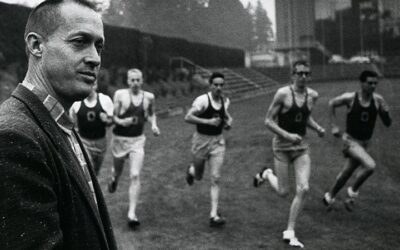
Introducing the Hard-Easy System
I’ve written three books on the Hard-Easy System. Each was like a doctoral thesis of my understanding of the system at the time: How to Read Your Body (1986), Running by Feeling (1996), and 5K and 10K Training (2006). The recently completed video version presents the...

Exertion Builds Ability
The Hard-Easy System is the most effective system for training endurance athletes. Of course, no system can describe the training process completely because systems reflect a collection of ideas, rather than the training reality. In the final analysis, the efficacy of...

Optimizing Workout Effort
The Hard-Easy System (HES) is especially useful in addressing how to exert optimal workout efforts. The solution is the Holy Grail of endurance training. When I began writing How to Read Your Body in 1985, I knew that a workout was essentially effort and energy. Thus,...

Establish New Ability-Building Workouts
In my opinion, the most difficult training problem occurs whenever one attempts to establish a new workout regimen. It’s a process of progressive adaptation that terminates a set of workouts that no longer build ability while substituting a new set which will build...